
Instruments are the biggest running cost decision most practitioners make. It is tempting to treat nippers and files as consumables: buy cheap, replace often. In practice that is the more expensive route, and the one that costs you clean cuts and comfortable appointments along the way.
Here is what separates a lifetime instrument from a throwaway one, and how to keep a good instrument working for years.
The City of Blades
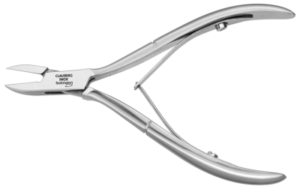
The instruments we supply are handmade in Solingen, Germany by the Clauberg family. Solingen has sat at the centre of European blade-making since the Middle Ages, known as der Klingenstadt, the City of Blades. It is not a marketing label. “Made in Solingen” is a protected mark of origin, and makers have to meet a defined quality standard before they are allowed to stamp it on a blade. That privilege was won in 1794, and the standard has been guarded ever since.
When an instrument carries that heritage, you are buying centuries of accumulated craft, not a logo.
Hard enough to last, flexible enough to cut
The property that matters most in a nail nipper is a balance that sounds like a contradiction. The steel has to be hard and flexible at the same time.
Hard, so the cutting edge holds its sharpness through years of use rather than dulling in months. Flexible, so the blades can flex under load as they close and still meet along a clean, precise cutting line. Steel that is only hard is brittle and chips. Steel that is only soft loses its edge fast. Getting both properties into one instrument is the craft, and it is what the best Solingen makers have spent generations perfecting.
The result is an instrument that takes a clean cut on the first pass, holds that edge for years, and does not leave the ragged edges that bring patients back.
The false economy of cheap instruments
A cheap nipper feels like a saving. Then the edge goes, the cut turns ragged, the blades stop meeting cleanly, and you replace it. Over a working life you buy the same tool many times over, and every appointment in between is a little harder than it needed to be.
A quality Solingen instrument costs more up front and less over its life. It is still cutting cleanly long after the cheaper alternatives have been binned.
Making a good instrument last
Even the best steel needs looking after. To get the full working life out of a quality instrument:
- Clean and dry it thoroughly after every use. Moisture left on the joint and blades is what leads to corrosion.
- Keep the joint moving freely and lubricated as the maker advises.
- Store instruments so the cutting edges are protected, not rattling loose against other tools.
Looked after, these become the instruments you reach for by default for a decade or more.
Where Hilary Supplies fits
We are the sole UK importer of the instruments handmade by Clauberg in Solingen, and we sell them direct, exclusively. We supply them because they are the best available, not the cheapest, and because a practitioner’s instruments should outlast the fashion for replacing everything.